
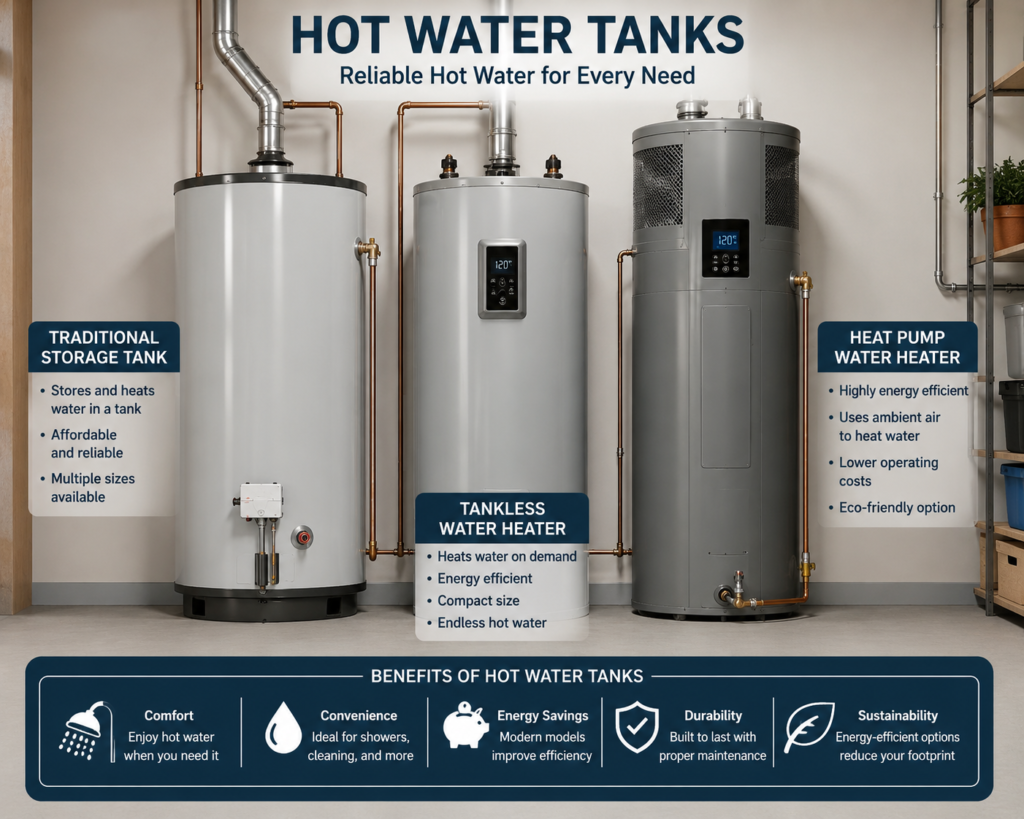
Hot water is an essential part of everyday life. From showers and bathing to washing dishes and cleaning, households depend on a reliable supply of heated water. Choosing suitable Hot Water Tanks and maintaining them properly can help homeowners enjoy consistent hot water while supporting efficient household operation.
A water heating system is a long-term investment, so homeowners should consider factors such as household size, water usage, energy efficiency, available space, and installation requirements before making a decision.
Understanding Hot Water Systems
Traditional water heaters store heated water inside a tank so that it is available when needed. The tank heats the water and maintains it at a selected temperature until it is used.
The appropriate tank size depends largely on household demand. A small household may not require the same capacity as a larger family with multiple bathrooms and frequent hot water usage.
Choosing the right capacity helps reduce the possibility of running out of hot water while avoiding unnecessary energy consumption.
Choosing the Right Tank Size
One of the most important decisions is selecting an appropriate tank capacity.
Consider Household Size
The number of people living in the home can influence hot water requirements. More residents generally means more showers, laundry, dishwashing, and other activities that require heated water.
Families should consider their peak usage periods when selecting Hot Water Tanks. If several people regularly need hot water at approximately the same time, a system with suitable capacity can provide greater convenience.
Consider Your Daily Water Usage
Households with high hot water demand may need a larger system. However, choosing the largest available tank is not always the best solution.
A professional assessment can help determine the appropriate capacity based on household habits and existing plumbing infrastructure.
Benefits of Proper Installation
Correct installation is essential for safe and reliable water heater operation. The tank needs to be positioned properly and connected to the home’s plumbing and energy supply according to applicable requirements.
Professional installation can also help identify potential issues with existing pipes, valves, drainage, and connections.
When Hot Water Tanks are installed correctly, homeowners can have greater confidence in system reliability and safety.
Energy Efficiency Considerations
Energy efficiency should be considered when selecting a new water heater. A more efficient system may use less energy to heat and maintain water at the required temperature.
Homeowners should compare efficiency information and expected operating costs before making a purchase. While an efficient unit may cost more initially, lower operating expenses can provide benefits over the long term.
Insulation around the tank and hot water pipes can also help reduce heat loss. Homeowners should follow manufacturer recommendations and professional advice when making efficiency improvements.
Signs That a Water Heater May Need Replacement
Water heaters do not last forever. Over time, components can wear out and performance can decline.
Common warning signs may include inconsistent water temperature, insufficient hot water, unusual sounds, visible corrosion, or leaks around the tank.
When these problems occur, homeowners should arrange for a professional inspection. Some issues may be repairable, while older systems may be more practical to replace.
Replacing aging Hot Water Tanks before a major failure can also help homeowners avoid unexpected interruptions to their hot water supply.
Maintaining Your Water Heater
Regular maintenance can help support reliable operation. Homeowners should follow the manufacturer’s maintenance recommendations and arrange professional inspections when appropriate.
The surrounding area should be kept accessible so that technicians can inspect the equipment safely. Any visible leaks or unusual changes in performance should be addressed promptly.
Regular maintenance may also help identify developing problems before they result in larger repair expenses.
Professional Installation and Safety
Water heating systems involve plumbing, heat, electricity, gas, or other energy sources depending on the equipment type. Because of this, installation should be handled by appropriately qualified professionals.
A professional can evaluate the installation location, make the required connections, and test the system after installation.
Professional installation of Hot Water Tanks can also help ensure that important safety components are correctly installed and functioning as intended.
Planning for a Replacement
When replacing an older water heater, homeowners should consider both immediate and long-term needs. The new system should be suitable for household demand and compatible with the home’s existing infrastructure.
It is also useful to compare different capacities, efficiency levels, installation requirements, and expected operating costs.
Homeowners should avoid choosing a system based solely on the purchase price. A reliable and appropriately sized system can provide better value over its useful life.
Final Thoughts
Reliable hot water is an important part of a comfortable and functional home. Selecting the appropriate tank size, considering energy efficiency, and arranging professional installation can help homeowners maintain dependable hot water.
Whether replacing an aging system or planning a new installation, choosing suitable Hot Water Tanks based on household requirements can make a significant difference. Regular maintenance and timely professional inspections can further support reliable performance and help homeowners identify potential problems before they become major issues.
 owais
owais