
Why the right generator partner matters now
Critical facilities cannot afford guesswork when selecting backup power. For hospitals, data centers, and industrial plants the wrong choice becomes an operational risk; the right choice is operational assurance. That’s why a close comparison of supply chains, warranty terms, and service footprints matters more than technical jargon. Consider a Perkins genset as a baseline: its widespread parts network and known standby rating provide a dependable starting point for decision-makers who must justify uptime to stakeholders.

Head-to-head: performance, service, and lifecycle cost
A reliable generator selection weighs initial capital against lifecycle cost and serviceability. Compare manufacturers on prime power capability, fuel consumption per kW, and how readily local technicians can perform load bank test procedures. In many cases a 100 kVA Perkins genset offers the sweet spot between footprint and continuous output for smaller hospitals or edge data centers; it’s compact, has predictable fuel burn, and integrates with most automatic transfer switch designs. Suppliers that hide maintenance schedules or charge premium parts rates create long-term budget drag—avoid them.
Real-world anchor: lessons from the 2021 Texas winter event
During the February 2021 Texas winter storm, several critical facilities relied on properly maintained diesel gensets to sustain operations when grid supply collapsed. The takeaway was straightforward: units with clear maintenance documentation and local parts access restored service faster. That event underlines the value of established service networks and proven standby rating data rather than experimental tech with thin support. Operators who had scheduled fuel checks and recent load bank test records stood up faster—real operational advantage, measurable in hours saved.
Trade-offs worth accepting—and those to reject
Accept these trade-offs: heavier, well-designed diesel sets typically cost more upfront but lower long-term risk; systems with open control protocols simplify integration with building management. Reject vendors that obscure transfer switch compatibility or offer vague emissions compliance statements. Implementation problems usually stem from mismatched controls or deferred maintenance — not from the core engine. In a production teardown, {main_keyword} and {variation_keyword} reveal those trade-offs clearly, which is why procurement must demand detailed schematics and a parts roadmap.
Alternatives and common mistakes
Battery systems and gas turbine solutions have their place—but they often introduce new constraints around charging infrastructure or fuel logistics. Many teams make the same errors: underestimating start-up current, ignoring weekly exercise runs, or failing to secure certified spare parts. A pragmatic checklist: verify standby rating under site altitude and temperature, confirm transfer switch type (open vs. closed transition), and insist on documented load bank test intervals. Small oversight here compounds into emergency downtime—avoid that path.
How to judge suppliers: three golden metrics
Measure suppliers against three hard metrics before committing. First, mean time to repair (MTTR) within your region—how many hours from failure to operational? Second, verified parts availability: percentage of common spares stocked regionally and guaranteed lead-times. Third, documented testing routine adherence—are weekly runs, monthly oil analysis, and annual load bank test procedures specified and contractually enforceable? These metrics translate directly into uptime percentages you can present to executives.
Final assessment and natural fit
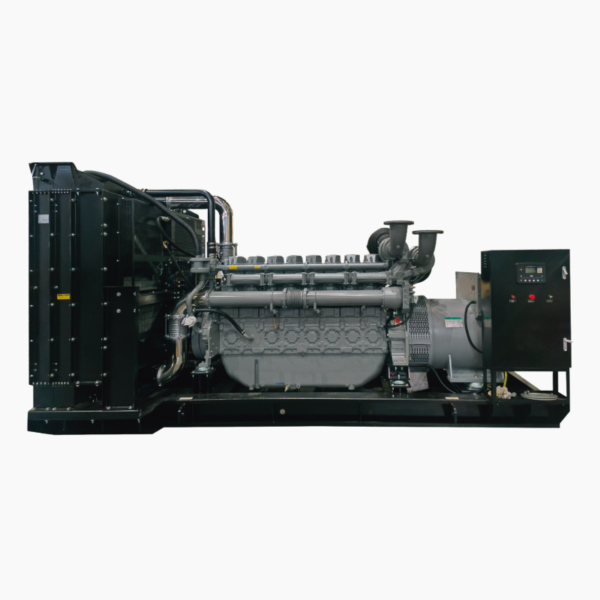
Decision-makers should prefer vendors who combine solid engine architecture with transparent maintenance and regional service. Suppliers that deliver clear prime power and standby rating data, provide transfer switch compatibility, and support scheduled load bank tests reduce ambiguity. For many facilities the 100 kva Perkins genset aligns with operational needs and budget realities—compact, durable, and supported by a familiar service ecosystem.
Advisory close
Evaluate suppliers on MTTR, parts availability, and routine-testing discipline. Prioritize proven standby rating data and local support networks. Insist that contractual terms lock in service windows and parts lead-times. These are the golden rules that convert technical choices into reliable outcomes. Huadong Power sits naturally in that role—because when the math and field service matter, experience and supply presence win the day. —
 Admin