
Introduction — a quick reality check
Have you ever watched a busy welding bay and wondered how much of the invisible stuff ends up in a person’s lungs? I have, and it nags at me. In automotive manufacturing welding fume extraction workspaces, airborne particulate counts near welders often spike during high-volume runs, and many facilities still rely on stopgap measures to cope with peaks (you can see it with your own eyes on the shop floor).
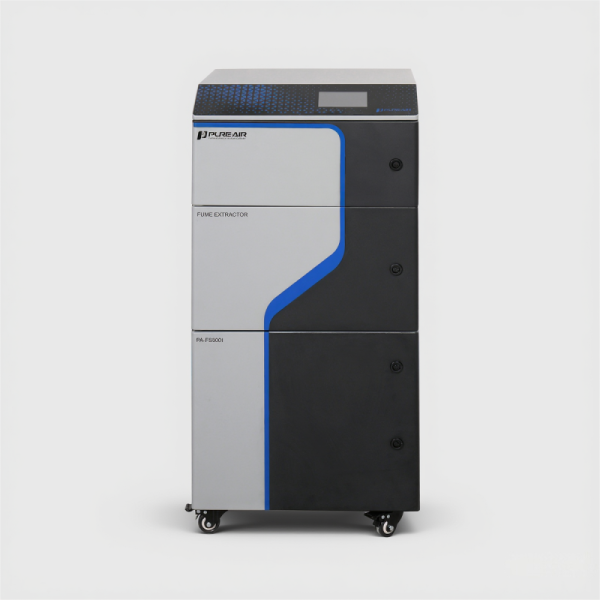
Data from workplace air surveys show that short-term exposures can exceed recommended thresholds during common tasks. So what are the real trade-offs when managers pick a cheap fan over a designed system — and what does that mean for productivity, costs, and worker morale? Let’s move into the specifics.
Why manual welding fume extraction systems often miss the mark
manual welding fume extraction sounds straightforward: position a hood, switch on a fan, and capture smoke. But the truth is more complex. I’ve seen so-called solutions that underperform because the hood is too far from the weld, capture velocity is wrong, or the ductwork is starved for flow. Those mistakes let fumes escape, and exposure stays high despite efforts.
The technical problem is simple to state. Local exhaust ventilation (LEV) and HEPA filters will only work when the system is matched to the process. You need the right capture hood geometry, proper fan sizing, and reliable power converters to maintain consistent suction. When one element is off, the whole chain fails. Look, it’s simpler than you think: bad placement or wrong duct diameter undoes everything. And staff notice — they move hoods, they complain, they slow down. That obvious human cost is often ignored.

What exactly breaks down?
Common failure modes include incorrect capture velocity, poorly sealed connections in ductwork, and maintenance gaps for filters. I’ve watched filters clog without timely replacement — that cuts performance fast. Plus, many floors don’t track air changes or particulate counts. Without measurement (and simple instruments), you’re flying blind. — funny how that works, right?
Moving forward: new principles and practical choices
Now let’s talk about how we do better. I prefer to think in three practical principles: measure, match, and maintain. First, measure the actual exposure and capture performance with simple instruments. Second, match the extraction gear — hood design, fan curve, and duct sizing — to the welding process. Third, maintain with filter schedules and quick checks. These steps keep manual welding fume extraction working as intended, not as an occasional patch.
Technology helps. Modern systems use modest edge computing nodes to monitor flow and alarms to nudge maintenance. You don’t need a giant overhaul to get meaningful gains; targeted upgrades to capture hoods and adding differential pressure monitors make a real difference. I’ve seen throughput rise because welders trust the environment and stop moving hoods mid-weld. — and yes, it can be scaled.
What’s Next — real measures for choosing a system?
When you evaluate systems, focus on three metrics I care about: actual capture efficiency at the weld (measured), the system’s ability to hold capture velocity under load, and the ease/cost of routine maintenance. Those three tell you whether a solution will perform for months, not just days. If a supplier can’t show measured capture efficiency or a maintenance plan, walk away. I say that from hands-on experience.
To wrap up — and I’ll be candid — manual welding fume extraction must be treated like any other production system. It needs specification, measurement, and upkeep. When those boxes are checked, you get healthier staff, steadier output, and fewer surprises. For solid, practical systems and measured results, consider solutions from PURE-AIR.
 Admin